
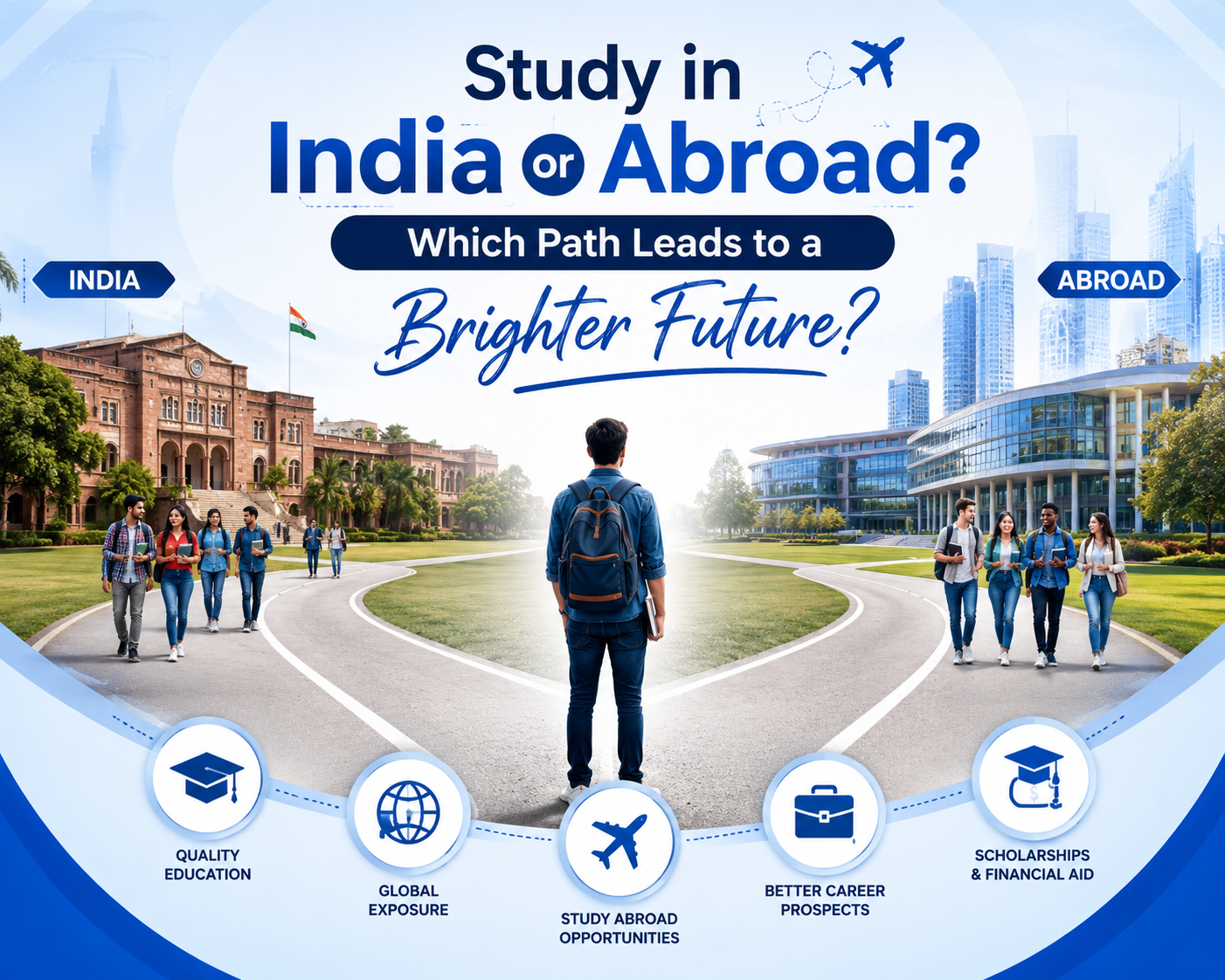
Education plays an important role in building a successful career. Every student dreams of getting a good job, earning a better salary, and creating a bright future.
India has many well-known colleges and universities that provide quality education. Even so, thousands of Indian students choose to study abroad every year.
Why do they make this choice?
The answer is simple. Studying abroad offers more than just a degree. It gives students international exposure, practical learning, modern facilities, and better career opportunities.
Let's compare studying in India and studying abroad to understand the differences.
1. Learning Style
Studying in India
Many colleges in India focus mainly on classroom learning and final exams. Students often spend a lot of time preparing for tests and memorizing information.
Course choices can also be limited. For example, an engineering student may not have the option to study subjects like business, communication, or design.
Studying Abroad
Universities abroad encourage students to learn through projects, discussions, presentations, and practical work.
Students also have more freedom to choose subjects from different fields. This helps them build useful skills for today's job market and discover new interests.
2. Student Life and Culture
Studying in India
Indian campuses bring together students from different states and cultures within the country. However, international exposure is usually limited.
Studying Abroad
When you study abroad, you meet students from many different countries.
You learn about new cultures, traditions, and ways of thinking. Working with people from different backgrounds also improves your communication and teamwork skills.
3. Career Opportunities
Studying in India
Every year, millions of students graduate from Indian colleges. This creates strong competition for good jobs.
Finding a high-paying job can be challenging, especially in popular fields.
Studying Abroad
A degree from a well-known international university is recognized around the world.
Many countries also allow international students to stay and work after graduation. This gives students valuable work experience and often leads to higher salaries.
4. Campus Facilities
Studying in India
Some Indian universities have excellent infrastructure, but many institutions still face challenges such as crowded classrooms, limited research funding, and older equipment.
Studying Abroad
Many international universities invest heavily in modern classrooms, advanced laboratories, libraries, and research centers.
Students get opportunities to work on real projects using the latest technology.
5. Personal Development
Studying in India
Many students stay close to their families during college. While this provides comfort and support, it may offer fewer opportunities to become fully independent.
Studying Abroad
Living in another country teaches important life skills.
Students learn to manage their finances, cook, travel, solve problems, and make decisions on their own.
These experiences help build confidence, responsibility, and leadership skills.
Is Studying Abroad Worth the Cost?
Studying abroad can be expensive, but many students see it as a long-term investment.
Some of the biggest benefits include:
- Better career opportunities
- Higher earning potential
- International work experience
- Exposure to different cultures
- A globally recognized degree
- Opportunities to build a worldwide professional network
With proper planning, scholarships, and financial support, studying abroad can become more affordable.
Final Thoughts
Both India and international universities offer quality education. The right choice depends on your career goals, budget, and personal interests.
If you want global exposure, practical learning, modern facilities, and international career opportunities, studying abroad can be an excellent option.
Planning your study abroad journey can feel confusing at first. An experienced education consultant can help you choose the right university, guide you through applications, find scholarship opportunities, and support you throughout the visa process.